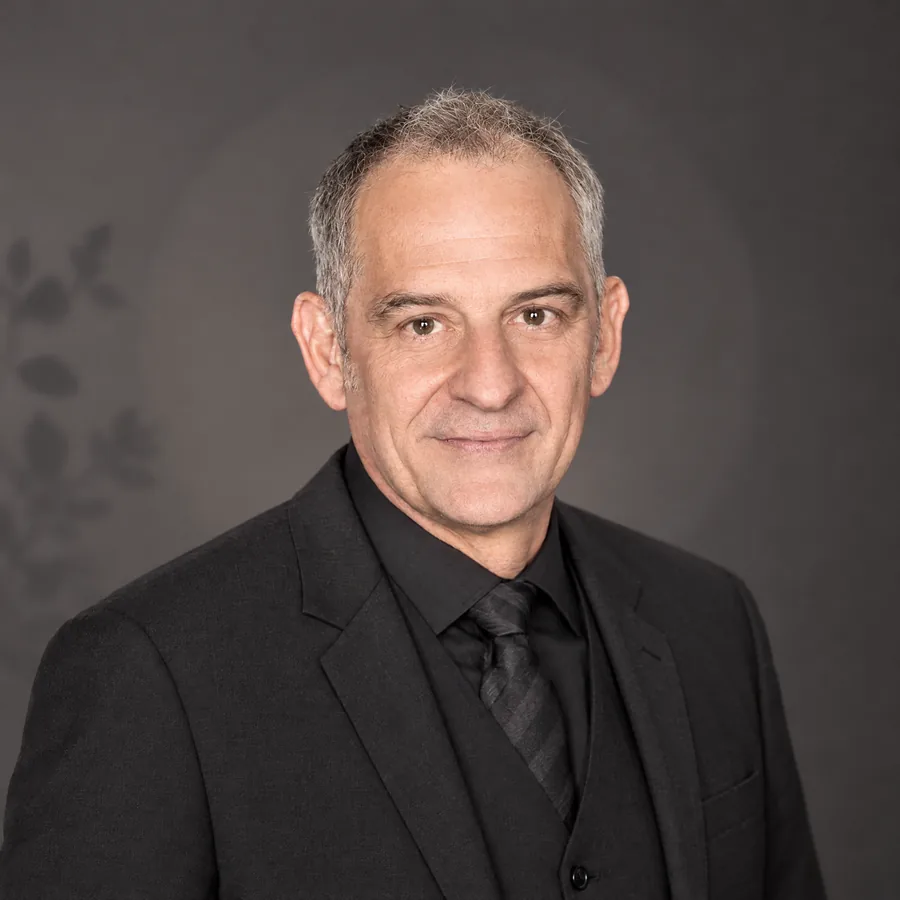
Cancer Geneticist
Professor Pascal Pujol
A medical geneticist, professor of medicine and recognised specialist in oncogenetics, Professor Pascal Pujol contributes to developing a form of medicine that is more preventive, more precise and better suited to the characteristics of each patient. Through his clinical work, his scientific research and his institutional commitments, he takes part in advancing knowledge of genetic predispositions to cancer and their management.
A university and scientific career devoted to medical genetics
Trained at the Faculty of Medicine in Montpellier, Pascal Pujol turned to genetics and oncology, two disciplines whose advances have profoundly transformed the understanding and management of disease. After obtaining his medical doctorate, he pursued his scientific career with research in the genetics and molecular biology of cancer, notably at the University of Texas at San Antonio, in the United States.
This dual approach, combining clinical practice and fundamental research, is central to his career. Appointed university professor in 2004, he has developed his work in the field of oncogenetics and taken part in numerous scientific studies on prevention, screening and therapeutic strategies in oncology.
Oncogenetics: understanding hereditary predispositions to cancer
Professor Pujol practises at the University Hospital of Montpellier (CHU de Montpellier), where he heads the clinical oncogenetics medical team. This specialty aims in particular to identify genetic predispositions that may increase the risk of developing certain cancers.
Oncogenetics makes it possible to study the hereditary factors that may play a part in the onset of the disease, to assess individual and family risks and, where indicated, to guide surveillance and prevention strategies. It also plays an important role in informing and supporting the people concerned and their families.
Advances in molecular genetics have opened new perspectives in medicine. In particular, they make it possible to better characterise certain risks, refine screening pathways and help select treatments suited to the biological profile of certain tumours.
In this context, Professor Pujol’s work is part of an approach that seeks to bring scientific advances closer to the practical needs of patients.
A commitment to predictive and personalised medicine
Beyond his hospital and university responsibilities, Pascal Pujol is president of the French Society of Predictive and Personalised Medicine (Société française de médecine prédictive et personnalisée, SFMPP). This learned society focuses on evaluating and integrating innovations in genetics, genomics and, more recently, artificial intelligence into medical practice.
Predictive and personalised medicine rests on an essential principle: better understanding each person’s individual characteristics in order to improve the prevention, screening and management of disease. It opens up significant prospects, particularly in oncology, where genetic characteristics can help guide certain medical decisions.
This evolution also raises fundamental questions about the interpretation of genetic results, data confidentiality, patient information and the limits of medical prediction. The challenge is to let patients benefit from scientific progress while ensuring that this new knowledge is used rigorously, ethically and appropriately.
Through his responsibilities within the SFMPP, Professor Pujol takes part in discussions aimed at evaluating the medical benefits of these innovations and at fostering their integration into care where their usefulness has been demonstrated.
A contribution to research and the sharing of knowledge
Professor Pujol’s career also includes substantial research and scientific publishing. He is the co-author of nearly 200 scientific publications, according to the professional profiles devoted to him. His work focuses in particular on cancer genetics, hereditary predispositions and the clinical applications of personalised medicine.
He has also taken part in coordinating therapeutic trials and in expert work contributing to the evolution of medical practice in France.
Wishing to make these questions accessible beyond scientific circles, he is also the author of books for the general public. Among them, Voulez-vous savoir ? Ce que nos gènes disent de notre santé, published in 2019, explores the possibilities offered by genetic knowledge and the questions it raises about our relationship with health.
This effort to make science accessible helps shed light on the issues at stake in medical genetics and fosters a better understanding of the possibilities, but also the limits, of predictive medicine.
Towards a more precise, patient-centred medicine
Advances in genetics and genomics are gradually transforming approaches to prevention, diagnosis and treatment. Their value, however, depends on the quality of the scientific data, on how they are interpreted and on their relevance to each medical situation.
Professor Pujol’s career illustrates this interplay between scientific research, clinical expertise and reflection on medical practice. His commitment to oncogenetics and personalised medicine is part of a major shift in contemporary medicine: moving from an essentially general approach to care that is better tailored to the characteristics and needs of each patient.
As knowledge advances, one of the main challenges remains turning scientific innovations into tangible medical benefits, while respecting ethics and the relationship between doctor and patient.
Reference sources: CHU de Montpellier, Société française de médecine prédictive et personnalisée (SFMPP), Institut Français du Sein and Polytechnique Insights.