In recent years, computing has largely taken over individual human procedures in our daily lives, both in the social sphere (post offices closing down, no longer being able to be seen in person at the tax office or the social security office, all replaced by the internet...) and in the field of health.
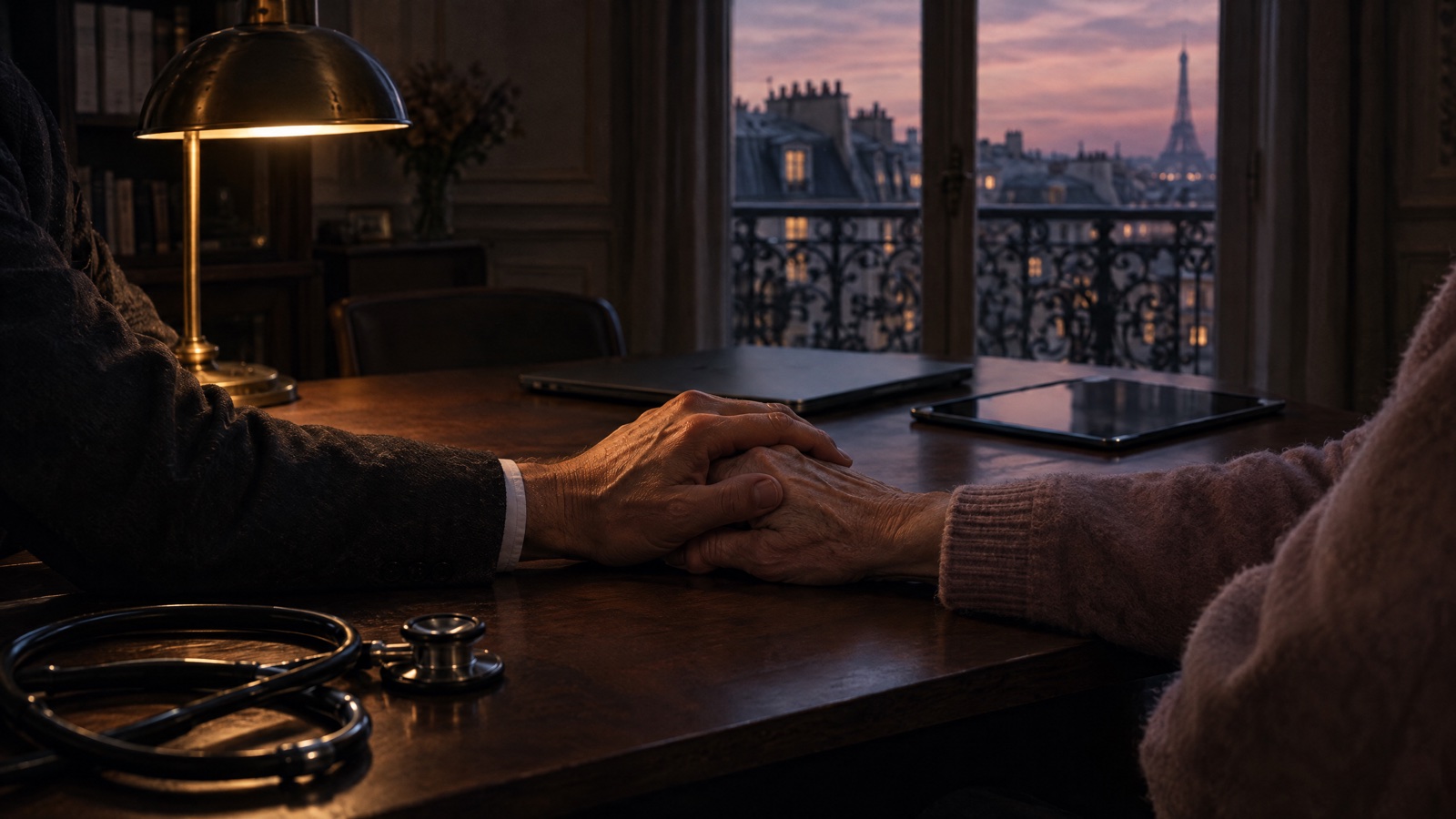
As far as health is concerned, we are a long way from seeing artificial intelligence capable of replacing the doctor. It can certainly be useful to the doctor, but it is not currently capable of replacing human contact, or our knowledge of our patients, both over time and in all the complexity of their lives (including their social and emotional lives).
Financial arguments of productivity, efficiency, speed and staff savings are relentlessly pushing to do away with personal, human contact, asking AI to take its place and do everything in its stead.
And yet several things stand against this:
- the ageing of the population, which does not find computers easy to use;
- the accumulation, over the years, of various conditions in our patients, which makes their files, and therefore decision-making, more complex, as people live longer and longer;
- in oncology, increasingly numerous and complex treatment options cannot be managed by artificial intelligence alone. Of course, it is useful to us as a memory amid the abundance of scientific data, but it cannot make a choice for the patient without discussing it with them, or without the patient being able to express their priorities and values, that is to say within the framework of a shared decision made in consultation.
In practice:
- we must restore the value of human contact in society in general, and in medicine in particular;
- we must restore the value of doctors' competence, which is indispensable to making the right decision for a patient;
- we must restore the value of the time we must devote to each person, rather than offloading it onto a machine that will “do the work for us”.
Let us not forget, moreover, the many scandals currently unfolding, which show that all this data is not secure at all: the latest scandals involving the hacking of the Ministry of Finance, La Poste, numerous hospitals and so on are examples, and they are only multiplying.
We will never stop advocating for a more human medicine, based on individual human contact, on taking one's time, on caring for a patient over many years.
In such a system, artificial intelligence can only be a tool that is there to help the doctor, and must not be seen as a threat that will replace them.
This is not what patients want.
AI will take the place of (and put out of work) those in our society whose activity brings no added value; the more competent we are, the harder it will be to be replaced by the machine. So let doctors tell themselves:
LET US BE COMPETENT,
LET US PRACTISE HIGH-QUALITY MEDICINE,
LET US GIVE OUR PATIENTS TIME.
Otherwise, AI will gradually take our place.
There is no need to worry or to be afraid; on the contrary, we must learn the lessons and anticipate.
Of course, this optimistic conclusion must be tempered by the lesson of the recent past: the internet is only some fifty years old, and we have not mastered at all one of its offspring, social media, with all the consequences for young people for which it is criticised. To hope that we will be “intelligent” enough to master AI: is that not refusing to learn the lesson? And as everything is accelerating, do we not risk soon seeing the consequences of AI's development?
Only the future will tell; in any case, Pandora's box is open...
Professor Jean Michel Vannetzel — September 2026